Sage Tax Codes Explained: Complete Setup and Usage Guide
Sage Tax Codes: A Complete Guide for Accurate Accounting
If you are facing issues with sage tax codes +1(844)341-4437, you are not alone. Many businesses struggle to configure tax settings correctly inside Sage, which can lead to wrong invoices, incorrect tax reports, and compliance problems. Sage tax codes are essential for ensuring every transaction is charged with the correct tax rate. When set up properly, they help automate tax calculations and improve reporting accuracy. If you need help at any stage, you can also contact experts at +1(844)341-4437 for quick assistance.
In this detailed guide, we will explain what sage tax codes are, how they work, and how you can manage them effectively using Sage software.
What Are Sage Tax Codes?
Sage tax codes are predefined labels in Sage accounting software that determine how tax is calculated on sales and purchases. Each code is linked to a tax rate and a specific tax type, such as standard, zero-rated, or exempt.
By assigning the correct tax code to every transaction, Sage automatically:
Calculates tax accurately
Records it in the correct ledger
Generates precise tax reports
This is why learning how to use tax codes Sage properly is critical for every business.
Importance of Sage 50 Tax Codes for Businesses
Using sage 50 tax codes ensures that your accounting system remains compliant with tax regulations. Whether you handle sales invoices, vendor bills, or credit notes, tax codes make sure the right tax is applied every time.
Some major benefits include:
Automated tax calculations
Reduced manual errors
Accurate tax reports
Faster audits
Better financial transparency
With correct setup, Sage 50 tax codes save time and protect your business from costly mistakes.
How Sage Tax Codes Work in Transactions
Every time you create an invoice, receipt, or bill, Sage prompts you to select a tax code. The software then:
Applies the associated tax rate
Calculates the tax amount
Posts it to the correct tax account
This seamless process ensures consistency and accuracy across all your financial records. If you ever face confusion or incorrect results, call +1(844)341-4437 to get expert help.
Understanding Tax Codes Sage Structure
The structure of tax codes Sage is based on:
Tax type (sales or purchases)
Tax rate (percentage)
Ledger posting account
For example:
A standard tax code may apply 10% or 20% tax
A zero-rated code applies 0%
An exempt code applies no tax but still records the transaction
Each tax code is designed to match a specific tax scenario.
Sage 50 Tax Codes List: Common Examples
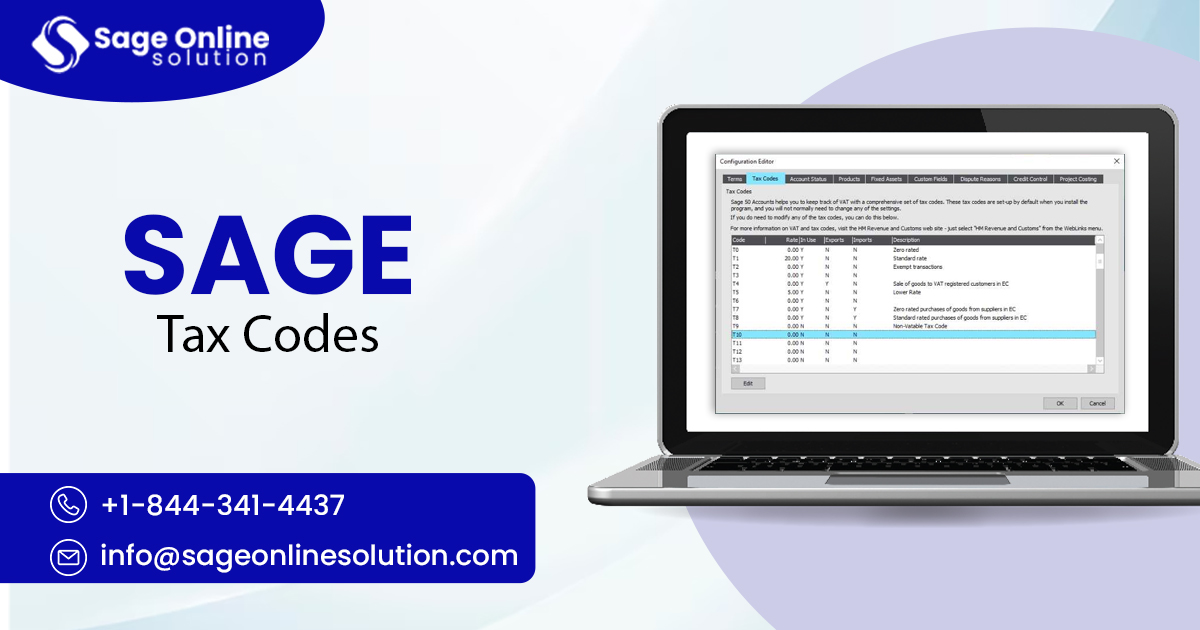
Below is a basic sage 50 tax codes list used by many businesses:
| Code | Description | Tax Rate |
| T1 | Standard Rated Tax | 10%/20% |
| T0 | Zero Rated | 0% |
| T2 | Exempt | 0% |
| T3 | Reverse Charge | Variable |
| T4 | Out of Scope | 0% |
This tsage 50 tax codes list may vary depending on your region and tax laws, but these are the most commonly used examples.
What Is T9 Tax Code Sage?
The t9 tax code sage is often used for special or custom tax scenarios. It is generally configured for:
Non-standard tax rates
Special tax exemptions
Custom reporting needs
Many businesses use T9 when standard tax codes do not meet their reporting or compliance requirements. If you are unsure how to configure T9, support is available at +1(844)341-4437.
How to Set Up Sage Tax Codes
To set up sage tax codes, follow these steps:
Open Sage and go to Settings
Select Tax Codes
Click New
Enter a tax code name
Assign a tax rate
Link the correct tax ledger account
Save changes
Once set, these codes can be used across all transactions.
Editing and Managing Sage 50 Tax Codes
Sometimes tax rates change, and you must update your system. To manage sage 50 tax codes:
Go to the tax settings menu
Select the code you want to change
Update the tax rate or description
Save the new settings
Never delete a tax code that has been used in transactions. Instead, mark it as inactive.
Common Issues with Sage Tax Codes
Here are a few common problems users face:
Wrong tax amounts on invoices
Missing tax codes
Incorrect tax reports
Duplicate tax codes
T9 not calculating properly
These errors can affect your financial data and compliance. For quick troubleshooting, contact +1(844)341-4437.
Best Practices for Using Sage Tax Codes
To avoid errors:
Always assign a tax code to each transaction
Review your tax codes regularly
Keep a backup before making changes
Train staff on proper usage
Test changes before applying them
These steps will help maintain accurate tax records.
Sage Tax Codes for Sales and Purchases
Sage separates tax codes into two categories:
Sales tax codes – applied on customer invoices
Purchase tax codes – applied on vendor bills
Using the correct type ensures that taxes are recorded correctly in your reports.
Generating Tax Reports Using Sage
Sage allows you to generate tax summaries based on your tax codes. These reports show:
Total taxable sales
Total tax collected
Total tax paid
Net tax liability
Accurate tax codes Sage setup ensures your reports are always correct.
Why Correct Sage Tax Codes Matter
Incorrect tax codes can:
Cause compliance issues
Lead to penalties
Create audit problems
Distort financial statements
By maintaining the right setup, you protect your business and save time.
When to Seek Professional Help
If you are unsure about configuring sage tax codes or managing complex tax rules, expert help can save you time and prevent costly errors. Reach out to +1(844)341-4437 for professional guidance whenever needed.
Conclusion
Sage tax codes are a vital part of accurate accounting and tax compliance. Whether you are managing sage 50 tax codes, setting up the t9 tax code sage, or reviewing your tsage 50 tax codes list, the right setup ensures smooth financial operations. With regular reviews, proper configuration, and expert support from +1(844)341-4437, you can handle all your tax needs with confidence and accuracy.


